A rebuilt Attack on Titan anime hub covering the walls, key characters, entry points, and why the franchise still dominates fandom years later.
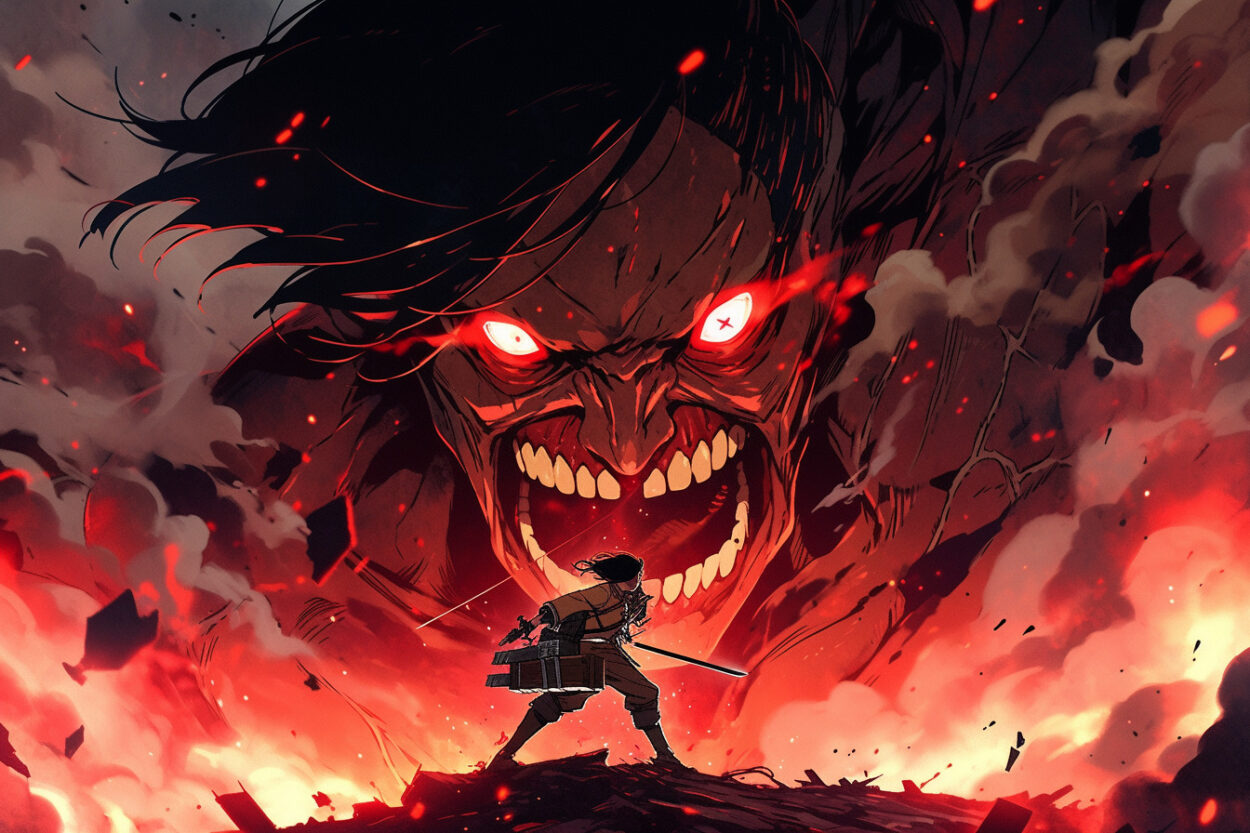
Attack on Titan Anime Guide: Characters, Walls, Entry Points, and Why Fans Stay Obsessed
Attack on Titan is one of those franchises that people keep trying to summarize with one big hook, and none of the simple versions quite work. Yes, it is the titan anime. Yes, it is violent, bleak, and built out of giant panic attacks in military uniform. But the reason it stayed lodged in fandom for so long is that it keeps widening the question underneath all the horror: what does freedom actually cost once the world gets bigger, crueler, and morally uglier than you were ready for?
That is why I still think this series lands harder than a lot of darker anime that technically have more shock value. Attack on Titan knows how to make terror feel physical, but it also knows how to make grief, loyalty, propaganda, sacrifice, and impossible choices feel intimate. It gives you monstrous spectacle and then quietly makes the worst damage emotional.
Quick Answer
Attack on Titan is a dark fantasy action franchise about humanity living behind massive walls to survive man-eating Titans, only to discover that the real story is much larger than simple monster survival. Fans stay attached because the series combines apocalyptic tension, unforgettable character design, moral collapse, and some of anime’s strongest search-driven characters, especially Mikasa Ackerman and Levi Ackerman.
Series Snapshot
| Creator | Hajime Isayama |
|---|---|
| Formats | Manga, TV anime, OVAs, compilation films, and the later finale-event film packaging |
| Core hook | Humanity fights Titans from inside walled cities while uncovering the political and historical truth behind their entire world |
| Best for | Fans of high-stakes action, dystopian mystery, military drama, tragic character arcs, and morally messy anime |
| Strongest search lanes | Mikasa, Levi, Eren, watch-order intent, best scenes, endings discourse, wallpapers, and franchise explainers |
| Best cluster bridges on this site | Mikasa guide, Levi guide, future Mikasa visual page, anime PFPs, and Top 100 Anime Waifus |
What Attack on Titan Is Actually About
At the start, the pitch is brutally clean. Humanity hides behind walls. Titans eat people. Eren sees his life destroyed and decides he wants vengeance and freedom with the kind of intensity that always sounds noble until a story starts asking what that intensity turns into later.
What makes the franchise stick is that it does not stay inside the obvious premise. It keeps escalating from survival horror into military drama, from military drama into political conspiracy, and from conspiracy into something uglier and more historical. The deeper you go, the more the series insists that terror is never just a monster problem. It is also a memory problem, a power problem, and a truth problem.
Why Fans Stay Obsessed With It
I think Attack on Titan works because it feels enormous without turning emotionally numb. The action is huge, the imagery is iconic, and the reveals get bigger as the story goes on, but the fandom attachment usually starts with one of the human anchors: Mikasa’s restraint, Levi’s control, Armin’s intelligence, Erwin’s conviction, Hange’s intensity, or Eren’s frightening refusal to stay small.
- The premise is easy to understand and hard to forget.
- The maneuver gear and Titan imagery are instantly recognizable.
- The cast supports both broad franchise searches and character-specific obsession.
- The series has enough emotional damage to keep discourse alive for years.
- The visual language is strong enough to support posters, wallpapers, and PFP intent naturally.
Best Entry Points for New or Returning Fans
Start with the main anime
The anime is still the easiest entry because the sound design, scale, and motion do so much of the stress-building. This is one of those franchises where the adaptation is a huge part of why the story became a global fixation.
Character-first entry
A lot of people come back through one specific favorite instead of through the full plot. On this site, Mikasa and Levi are the clearest bridges because both characters carry search demand and fandom loyalty without needing spoiler-heavy framing.
Visual-first fandom
This is also a franchise where image intent matters. Scarves, uniforms, maneuver gear, ruined walls, Titan silhouettes, and cold military palettes all translate well into wallpapers, posters, edits, and avatars.
Characters Carrying the Most Search Heat
Mikasa Ackerman
Mikasa is one of the cleanest waifu-and-authority winners in the whole franchise. She has iconic design, combat credibility, emotional weight, and the kind of visual simplicity that works perfectly for both character guides and support pages.
Levi Ackerman
Levi is the other obvious pillar. He brings the controlled-force energy that fandom never gets tired of, and he broadens this hub beyond just one emotional lane.
Eren Yeager
Eren is the franchise engine, but he also pulls a different kind of search interest. He is more debate-heavy, more spoiler-heavy, and more tied to the full arc of the series than a clean support page usually wants.
The broader Survey Corps lane
Erwin, Armin, Hange, Sasha, Historia, Annie, and Jean all help make this series feel like more than a one-character machine. That depth is why the franchise hub matters. It can route readers by mood, favorite, and curiosity instead of acting like a dead archive post.
What Makes the Aesthetic So Durable
Attack on Titan has one of the strongest visual vocabularies in anime. The red scarf. The green cloaks. The maneuver gear. The wall imagery. The smoke, stone, blood, and gray-blue sky. It all reads instantly, and it gives both editorial pages and visual-support pages a clear design language to build around.
That matters for Waifu For Laifu because it means the franchise can support more than one content lane at once. Character search, fandom nostalgia, decor intent, wallpaper/PFP interest, and broader anime-cluster browsing all fit without the page feeling stretched thin.
Best Support Pages to Build Around This Hub
- Character guides: Mikasa and Levi already give this cluster a solid authority core.
- Wallpaper and PFP pages: Mikasa is the clearest next visual-support winner.
- Best-scenes and quote explainers: strong because the franchise is packed with memorable turning points.
- Franchise browsing hubs: useful for readers who want one strong entry before going narrower.
- Fandom identity pages: works well because Attack on Titan fans tend to have very specific favorite-character loyalty.
If You Like the Attack on Titan Cluster, Start Here
- Mikasa Ackerman character guide
- Levi Ackerman character guide
- Mikasa wallpapers, posters, and PFPs
- Hottest Anime Guys
- Top 100 Anime Waifus
How This Hub Fits Waifu For Laifu
This page exists to replace the old thin Attack on Titan archive post with a real franchise hub while keeping the existing permalink untouched. It should answer broad anime intent, route readers into Mikasa and Levi, and support the site’s broader waifu, husbando, and visual-asset lanes without dragging permalink cleanup into the content sprint.
- Mikasa Ackerman character guide
- Levi Ackerman character guide
- Mikasa wallpapers, posters, and PFPs
- Anime PFPs
- Best Anime Boyfriends
FAQ
What is Attack on Titan about?
It starts as a story about humanity surviving behind walls against man-eating Titans and grows into a much larger dark-fantasy conflict about history, power, war, and freedom.
Why is Attack on Titan so popular?
Because it combines giant spectacle, emotionally brutal character arcs, iconic design, and mysteries that keep widening instead of collapsing.
Which characters currently anchor this site’s Attack on Titan cluster?
Right now, Mikasa Ackerman and Levi Ackerman are the strongest live character pages supporting the cluster.
What kind of support page fits this franchise best?
Character-specific wallpaper, poster, and PFP pages fit especially well because the franchise has such a strong visual identity.
Leave a Comment